We've written about the fruit order and about why merge games are so hard to put down. What we had never done was play our own Watermelon Game the way the strategy guides tell you to. Everyone at the office plays it the same lazy way: drop the fruit roughly above something that looks similar, hope the physics sorts it out.
So this time we went looking for strategy advice on the internet, wrote down the rules that kept coming up across the guides, and played by the book on an iPhone at the office table.
The three rules we borrowed
Most of the guides are written for the original Suika Game, so the fruit names don't match ours — our chain runs blueberry, tomato, orange, lemon and on up to the watermelon. Translated to our fruit, the advice boils down to three rules:
- Grow the big fruit at one end of the bin. Whatever is currently your largest fruit lives against one wall, and you keep feeding it there.
- Keep the surface sorted like a staircase. Big on one side, stepping down to small on the other — a blueberry next to a tomato, a tomato next to an orange — so whatever the game hands you next has a spot where it lands beside its own kind.
- Never drop a small fruit next to the big ones. This is the loudest warning in every guide we read. A blueberry wedged between two apples doesn't merge with anything; it just sits there keeping the apples apart.
The run
We propped the phone on its kickstand and started dropping. The early game felt almost bureaucratic: check the next-fruit preview, find the step on the staircase where that size belongs, drop, repeat.
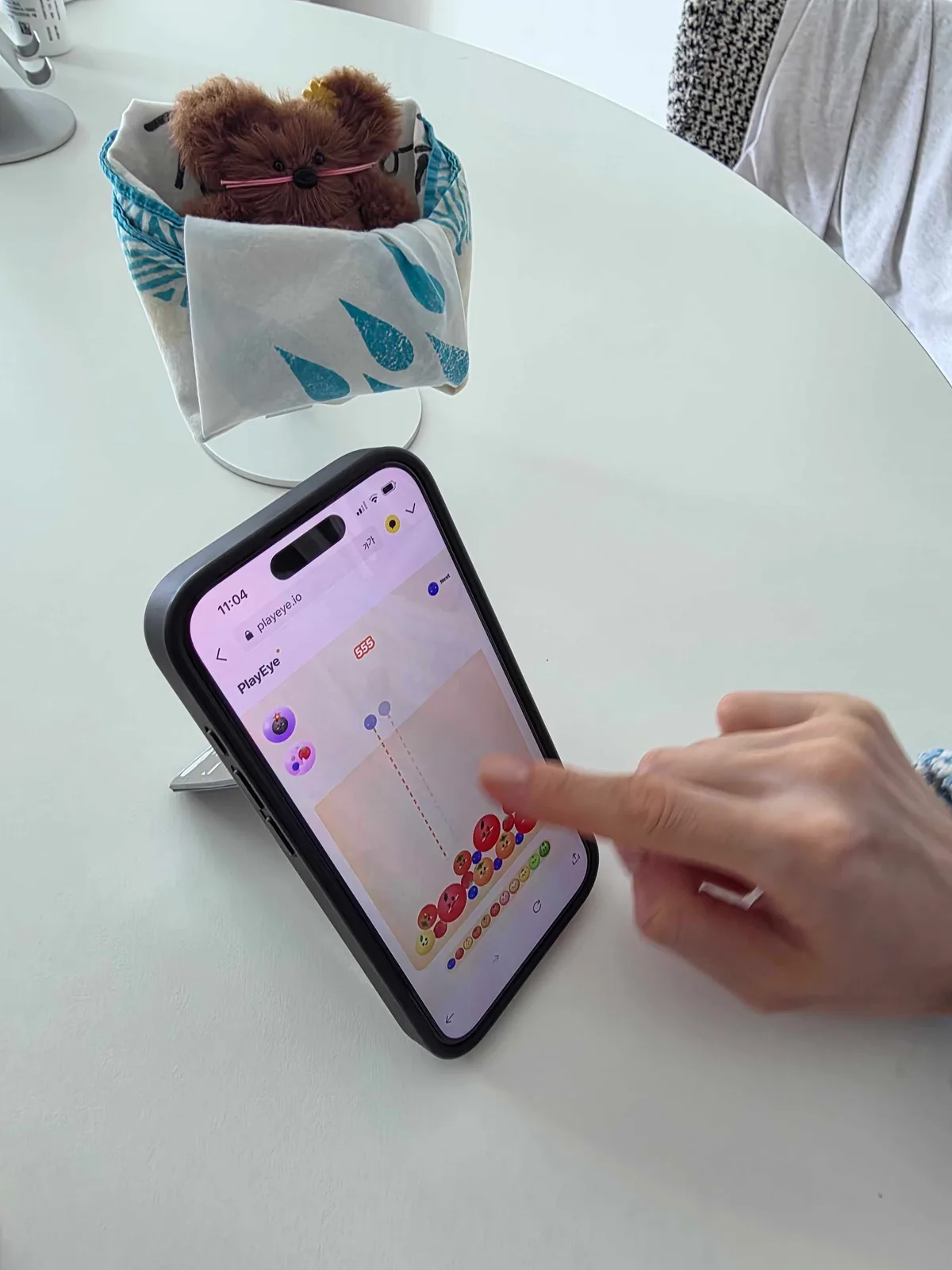
At 555 the board still looked like the diagram in the guide. At 800 it mostly did too — the reds and oranges were holding one side, and we were parking blueberries on the other edge like the guides told us to.
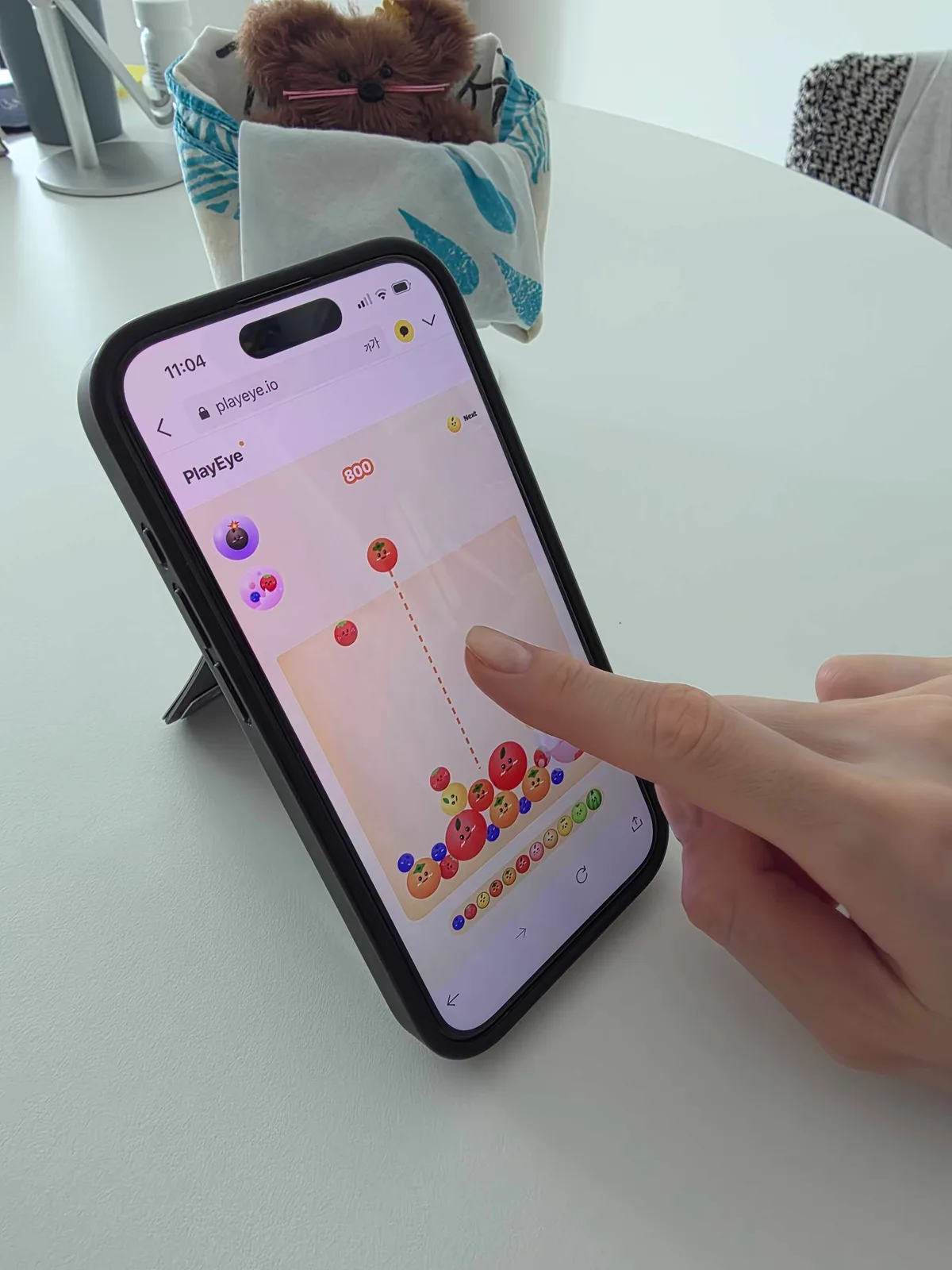
Somewhere past 1,000 the game stopped cooperating with rule one. Every time a chain of merges went off, the physics shuffled the survivors, and the big fruit we'd been growing against the wall came to rest wherever the cascade left it — usually the middle. We'd rebuild the staircase around its new home, another cascade would fire, and the whole arrangement would shuffle again.
Where the guide met reality
By the time the counter read 2,190, the board looked like this: the pear and the peach — our biggest fruits of the run — sitting low in the center, everything smaller stacked around them. Not at the wall. Nothing like the tidy staircase we started with.
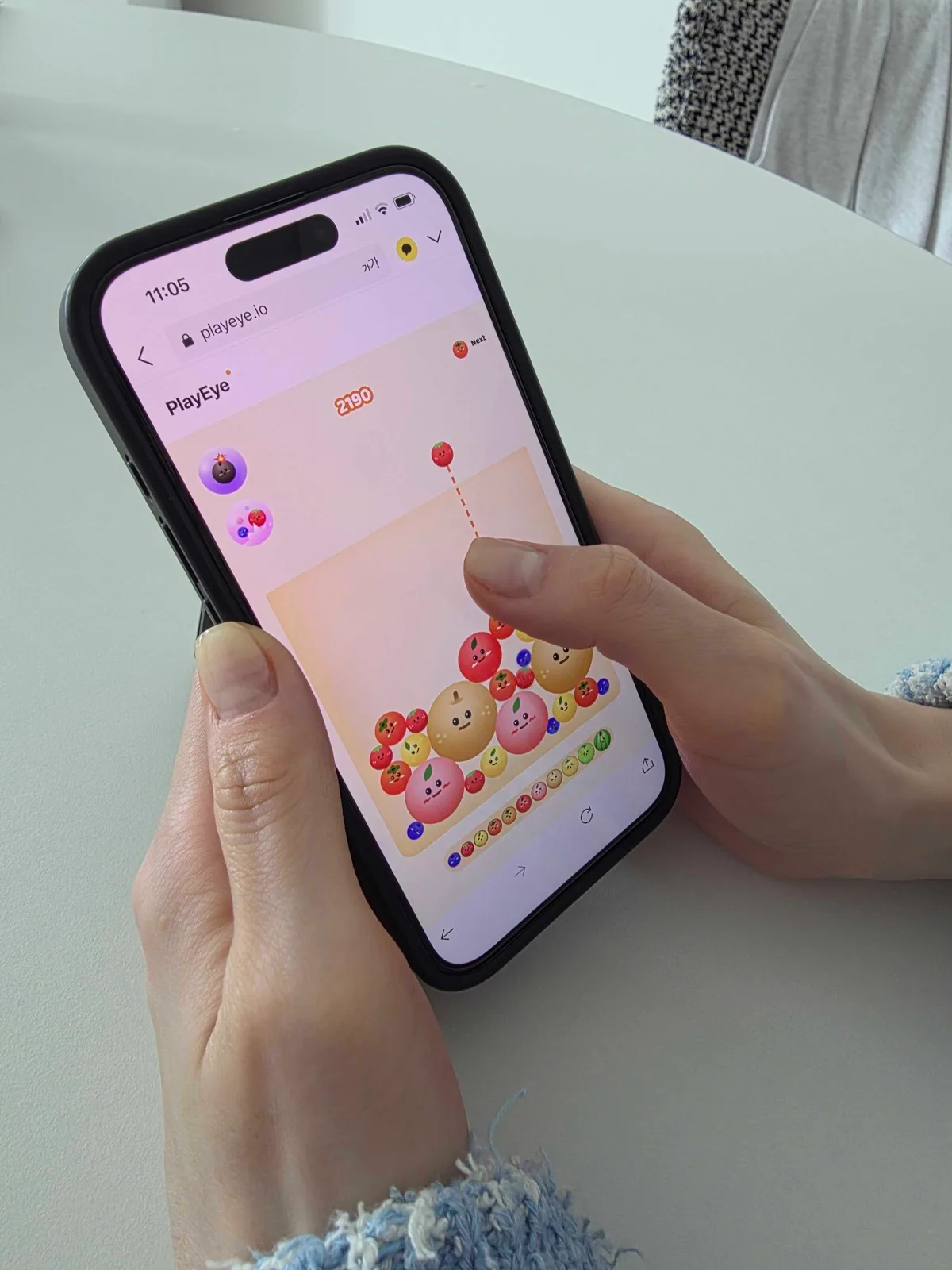
And yet the score kept climbing, which taught us the real lesson of the session: the three rules aren't equally important.
- Rule one (big fruit at the wall) kept breaking and it didn't seem to matter much. The cascades move the big fruit; you don't really get a vote.
- Rule three (no smalls next to bigs) mattered constantly. Every ugly stretch of the run traces back to a blueberry we dumped somewhere thoughtless. The loudest warning earned its volume.
- Rule two (keep sizes sorted) is really a habit of checking the preview. Our game shows the next fruit in the corner, and the one change that stuck was deciding where a fruit goes before it's in our hand, not after.
One more honest note: our version ships with a bomb and a clear-tool, and in the last photo you can see both icons still sitting untouched in the corner at 2,190. The guides don't cover items like these, so a by-the-book run meant ignoring them. A run where we actually spend them is a different experiment — probably a different post.
Next time we want to see how far the sorting habit alone carries a score when someone who plays the lazy way tries it side by side. If the advice is right, the gap should be embarrassing.